

How to Choose Diamond Boxes for Loose Stones or Finished Jewelry
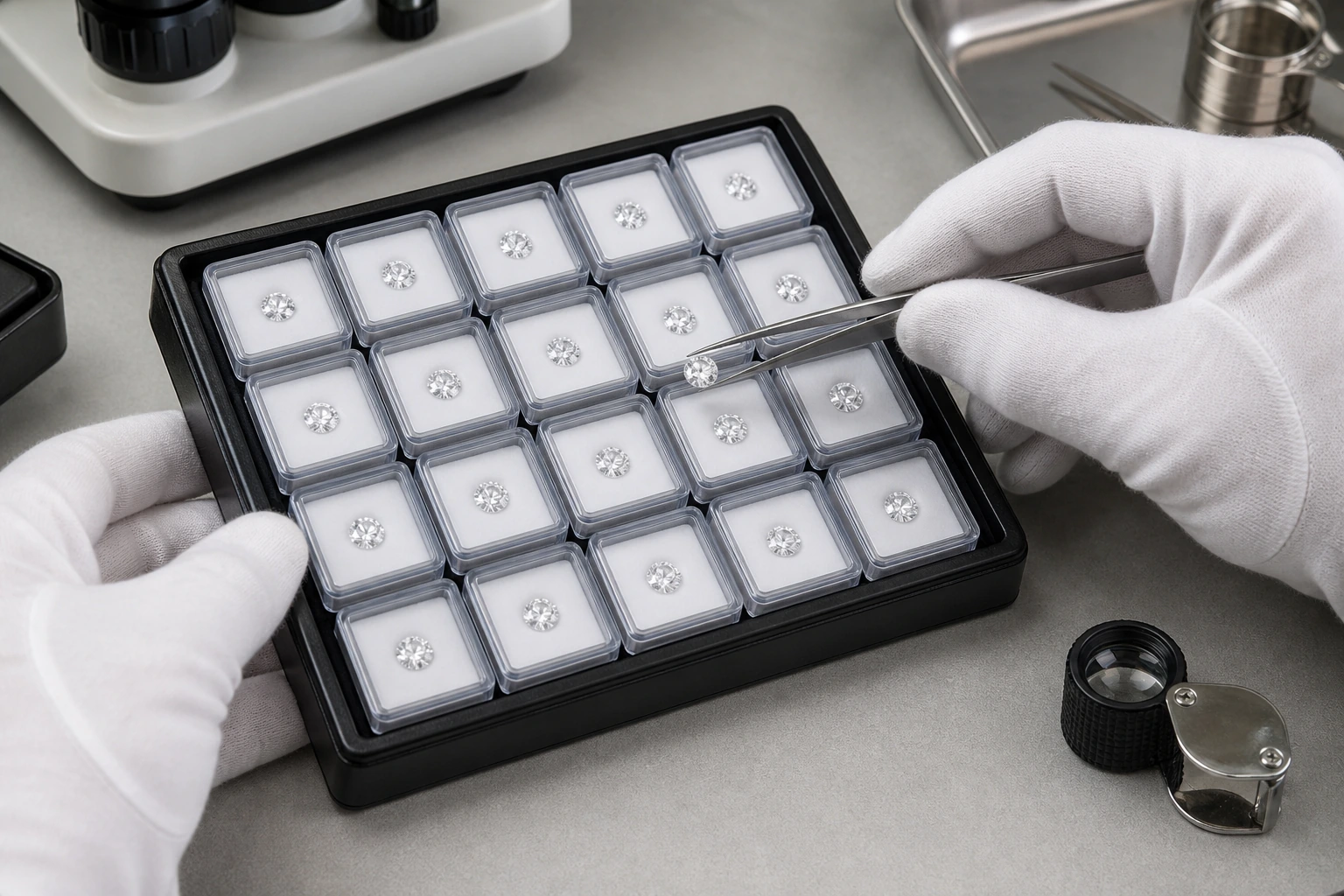
“Diamond box” can describe two different products. Dealers may mean a small box, compartment case, or tray system for viewing and organizing loose diamonds or gemstones. Jewelry brands may mean a presentation box for a finished diamond ring, pendant, or pair of earrings. Choose the category first, because the insert, viewing surface, retention method, handling routine, and approval test are different.
For loose stones, prioritize controlled compartments, clean viewing surfaces, easy comparison, labeling, and a documented handoff process. For finished jewelry, protect the setting, keep the piece centred, provide clearance above the stone, and support the intended unboxing experience. A decorative box should never be treated as a substitute for the secure storage, insurance, and custody procedures required for valuable diamonds.
For Loose Stones, Design Around the Handling Sequence
Map the workflow before selecting the container. Will one stone be presented to a client, will several stones be compared side by side, or will inventory move between a safe, desk, photography station, and sales room? A single-stone presentation box, a lidded compartment case, and a removable tray solve different parts of that sequence. Minimize unnecessary transfers between surfaces.
|
Workflow |
Useful structure |
Critical review |
|
Present one identified stone |
Small lidded viewing box with controlled pad or recess |
Stone remains visible and cannot slip into a seam |
|
Compare a short selection |
Separated compartments or individual boxes in a parent tray |
Identity stays clear when positions change |
|
Organize working inventory |
Numbered compartment system with removable modules |
Layout supports counting and controlled handoff |
|
Photograph or inspect |
Clean neutral field with removable holder |
Surface does not add lint, glare or confusing colour cast |
For Finished Jewelry, Protect the Setting and the Reveal
A diamond ring needs a slot that supports the shank without pressing the head or allowing the ring to tilt. Stud earrings require controlled spacing, post and back clearance, and a removable card or pad that does not release unexpectedly. A pendant needs a chain path, a centred focal point, and storage for excess chain that cannot tangle or scratch the setting.
|
Jewelry form |
Retention task |
Clearance to verify |
|
Engagement ring or band |
Hold the shank at the intended angle |
Stone height, halo width, prongs and lid lining |
|
Stud earrings |
Keep the pair level and secure |
Posts, backs, stone diameter and removal access |
|
Pendant necklace |
Centre the pendant and manage chain length |
Pendant drop, chain path, clasp pocket and lid |
|
Loose diamond jewelry set |
Separate each piece while presenting one story |
Hard-contact zones, removal sequence and accessory space |
Evaluate the Viewing Surface Under Controlled Light
White or light neutral surfaces can create a clean comparison field, while charcoal, navy, or black can increase visual contrast for some finished pieces. Warm cream, tan, or coloured velvet may support a brand mood but can influence the perceived colour of the scene. No background replaces proper diamond grading conditions. Choose the surface for presentation and workflow, then evaluate the stone separately under the appropriate controlled environment.
Inspect pile direction, seams, fibres, adhesive edges, and dust visibility. A luxurious soft surface can become distracting if lint collects around a loose stone. For repeated professional handling, ask whether the pad or insert can be removed, cleaned, or replaced without changing the identification system.
Select the Structure After the Insert Is Defined
The insert determines how the diamond or jewelry is held; the outer box protects that insert and expresses the brand. Paper-wrapped rigid board supports printed retail presentation. Wood provides a substantial reusable form. Leatherette and textile coverings add tactility. Metal cases can offer compact rigidity, but hard edges and hardware must be isolated from stones and jewelry. EVA or moulded components can organize compartments when their contact surfaces are properly covered and finished.
|
Construction direction |
Useful for |
Inspect closely |
|
Paper-wrapped rigid box |
Branded finished-jewelry presentation and gift packaging |
Corner protection, wrap quality, insert retention and outer shipper |
|
Wood or wood-finished box |
Reusable presentation and multi-compartment storage |
Joinery, lid alignment, hinges, surface coating and weight |
|
Leatherette or fabric-covered case |
Tactile presentation and coordinated sets |
Wrapped edges, seams, colour transfer and cleanability |
|
Metal or metal-framed box |
Compact presentation or structured storage |
Hard-contact isolation, closure, lining coverage and surface marks |
|
EVA or moulded compartment insert |
Organized layouts and repeatable positions |
Cell dimensions, surface cover, debris and removal access |
Treat the Box as Part of a Control System, Not the Security System
Compartments, labels, numbered positions, and tamper-evident outer procedures can support inventory control, but a presentation box does not make high-value stones secure. Define who places the item, who verifies identity, when the position is recorded, and how the loaded container moves between controlled locations. Keep item identification separate from decorative branding so it remains legible during handling.
- · Assign each stone or item a clear position and reference.
- · Avoid loose labels that can migrate between compartments.
- · Record transfers according to the buyer’s custody procedure.
- · Use secure storage and transport appropriate to value and insurance requirements.
- · Keep presentation packaging closed and protected when it is not being viewed.
Approve the Box With the Exact Item—or a Safe Equivalent
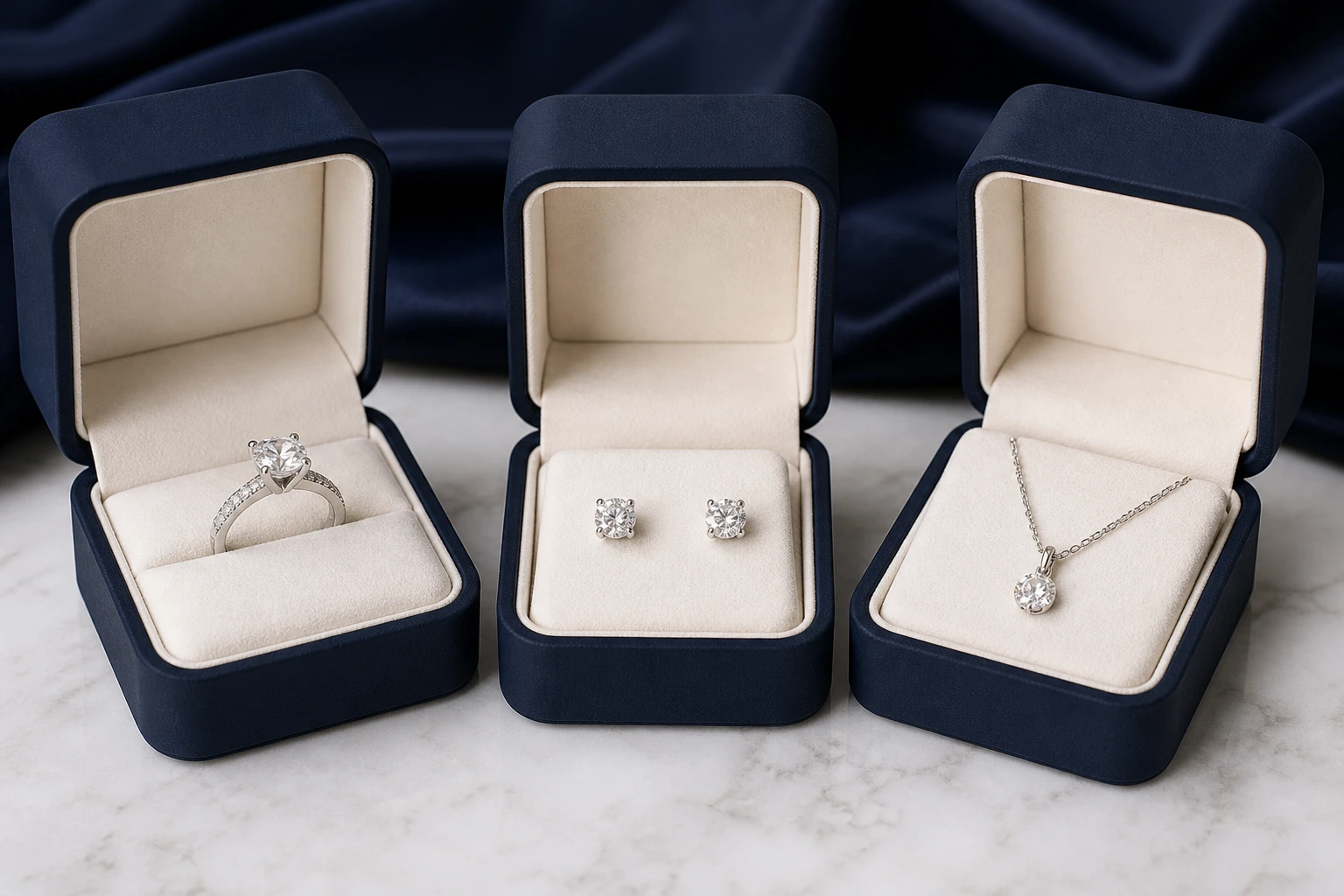
A generic sample cannot prove fit for a high-set ring, large earring backs, a deep pendant, or a particular loose-stone parcel. Use the exact item where controlled handling permits, or a dimensionally and weight-representative equivalent. Photograph the approved position, close the box, change orientation, reopen it, and inspect every contact point. For compartment systems, repeat the test with the smallest intended stone or item.
1. Confirm the item identity and dimensions used for the test.
2. Place it using the normal handling tool or staff routine.
3. Check visibility, removal access, and separation from seams or hard edges.
4. Close and orient the complete box as it will be handled.
5. Reopen, verify position, and inspect for fibres, marks, pressure, or movement.
6. Record the approved insert, material, and sample revision.
Plan for Fibres, Dust, Wear, and Replacement
Loose-stone work makes small debris highly visible, while finished-jewelry boxes may be opened repeatedly in retail. Approve a cleaning method for every contact surface and confirm whether staff can remove the insert without damaging the box. If a soft pad, label carrier, or compartment module wears faster than the outer case, give it a separate part code so it can be replaced without discarding the entire system.
Do not use unapproved chemicals near diamonds, treated gemstones, metals, adhesives, coatings, or textiles. The packaging supplier can define care for the box materials; jewelry and stone cleaning should follow the appropriate professional guidance for the item itself.
Questions Buyers Ask About Diamond Boxes
Is a diamond box the same as a diamond tray?
Not necessarily. A box usually encloses one item or a small group, while a tray organizes multiple boxes or compartments for comparison and handling. Some systems combine both.
What colour interior is best for diamonds?
There is no universal best colour. Use a clean, controlled surface for the intended presentation, and do not use packaging colour as a substitute for proper grading conditions.
Can a lockable presentation box secure loose diamonds?
A lock may restrict casual opening, but the box is not a complete security solution. Use appropriate custody, secure storage, transport, and insurance procedures.
Should loose stones touch velvet directly?
Only after the exact surface and handling method are evaluated. Fibres, seams, gaps, and static behaviour can matter. Many workflows use a defined pad, recess, parcel, or removable holder.
Send the Right Brief for the Diamond Box You Mean
For loose-stone boxes, provide the stone or parcel size range, number of positions, viewing and handling workflow, identification method, preferred surface, parent-tray relationship, repeat-use expectations, and destination. For finished-jewelry boxes, provide the jewelry type, exact dimensions, stone height, setting profile, chain or post requirements, preferred opening, brand artwork, materials, accessories, quantity, and distribution pack.
Mark every unconfirmed item as a decision to be reviewed, not a fact for the supplier to guess. A clear brief lets the structure, insert, viewing surface, branding, quality checks, and packing be developed around the same use case.
browse diamond box styles;compare diamond trays;contact OnTheWay


.png)
.png)
.png)

.png)

.png)