

Introduction:
Luxury Packaging Is No Longer Defined by Heavy Materials
For many years, luxury jewelry packaging was closely associated with weight.
Heavy wooden boxes, glossy lacquer finishes, and oversized packaging were often used to communicate premium value. But today, luxury packaging is evolving in a very different direction.
Modern jewelry brands are increasingly embracing paper-based packaging—not because it is cheaper, but because it allows greater flexibility, cleaner aesthetics, and a more contemporary expression of luxury.
In fact, some of the most refined jewelry packaging designs today are made primarily from paper.
The difference lies not in the material itself, but in how it is designed.
Luxury packaging is rarely about adding more elements.
More often, it is about precision, restraint, and material harmony.
A luxury paper jewelry box typically focuses on details such as:
- Balanced proportions
- Clean structural lines
- Sophisticated surface textures
- Soft interior contrast
- Minimal but intentional branding
The feeling of luxury often comes from what is controlled, not what is exaggerated.
This is why many premium jewelry brands prefer understated packaging rather than highly decorative boxes.
There are several reasons why luxury brands continue shifting toward premium paper packaging.
Modern Luxury Has Become More Minimalist
Customers increasingly associate simplicity with sophistication.
Paper Allows Greater Design Flexibility
Luxury paper boxes can support unique shapes, opening systems, and textures.
Better for E-Commerce and Retail
Paper packaging is lighter, easier to transport, and more practical for scaling.
It Creates a Softer Luxury Experience
Unlike heavy wooden boxes, paper packaging often feels more contemporary and approachable.
Sustainability Influences Brand Perception
Many consumers now expect luxury brands to reduce unnecessary excess.
For many modern jewelry companies, luxury is no longer about showing complexity—it is about creating refined experiences.
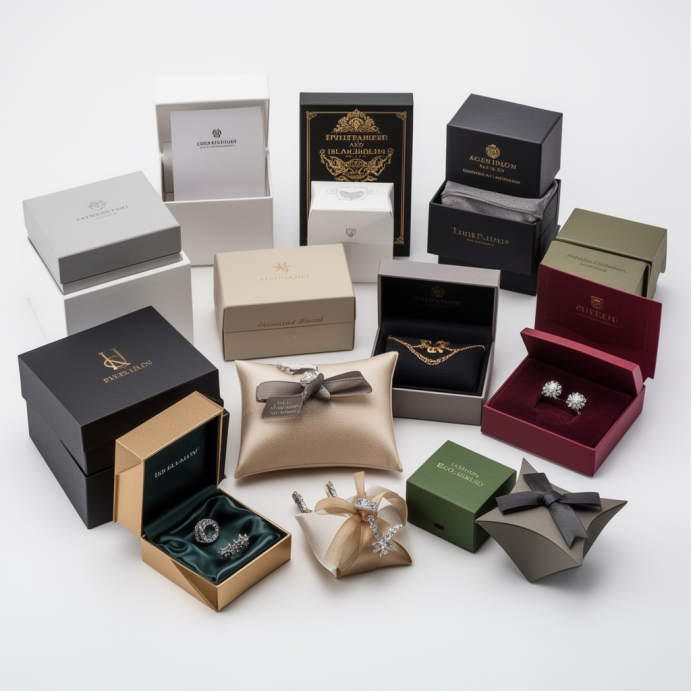
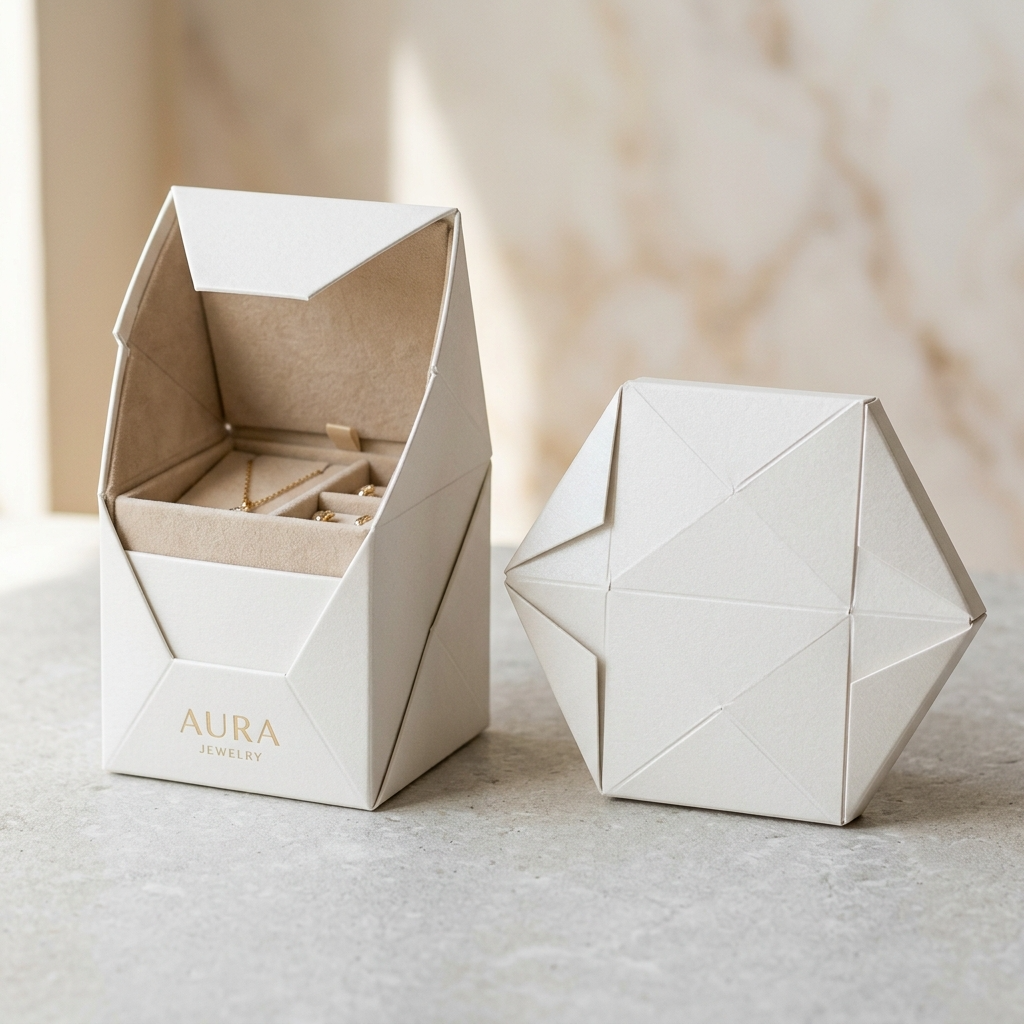
Luxury paper jewelry packaging can take many forms depending on brand positioning.
Rigid Lift-Off Boxes
Classic structure with strong presentation impact.
Drawer-Style Boxes
Often used to create a smoother, layered unboxing experience.
Magnetic Closure Boxes
Modern and elegant with clean visual lines.
Minimalist Foldable Boxes
Used by brands focusing on lightweight luxury and modern simplicity.
The most successful packaging structures are usually the ones that feel effortless to use.

Material selection plays a major role in how luxury packaging is perceived.
Textured Specialty Papers
Subtle grain textures immediately elevate packaging quality.
Soft-Touch Lamination
Creates a smoother and more tactile experience.
Foil Stamping
Often used minimally for understated branding.
Velvet or Suede Interiors
Add contrast and softness when the box opens.
Hidden Structural Details
Clean corners, concealed magnets, and seamless wrapping contribute significantly to premium perception.
Luxury is often communicated through craftsmanship that customers notice subconsciously.
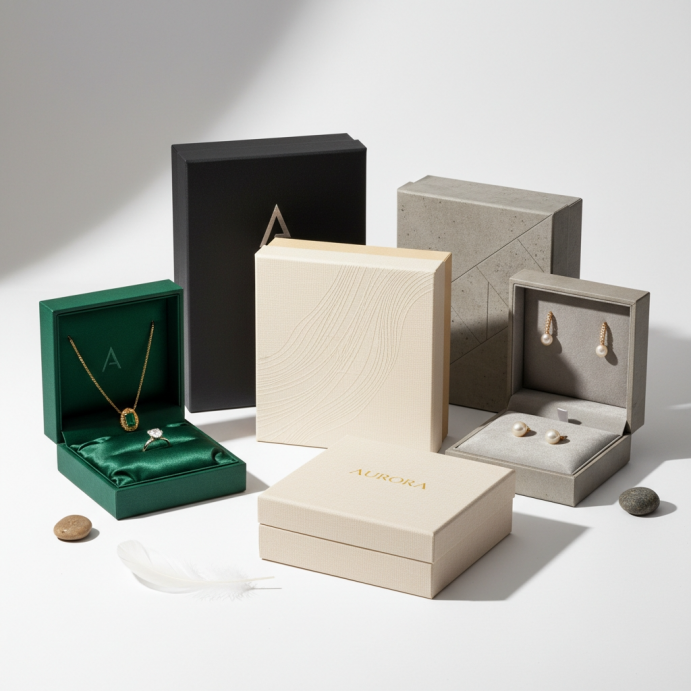
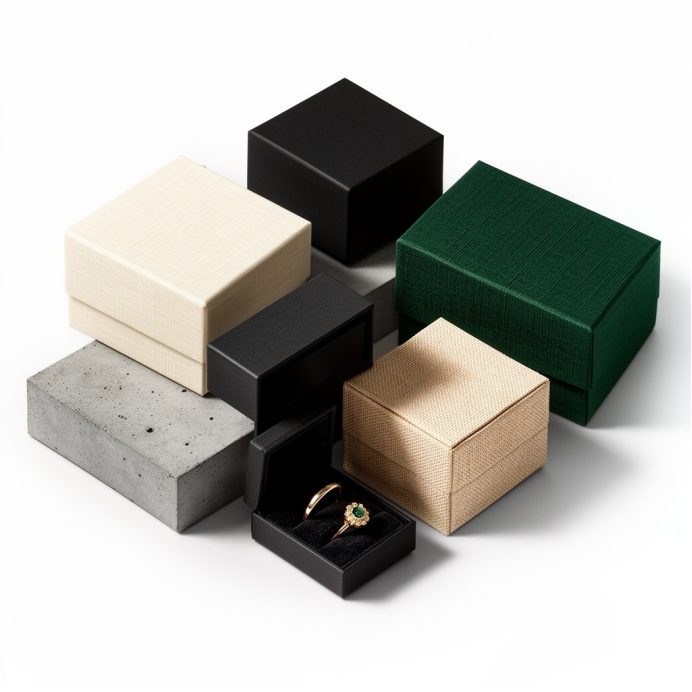
Luxury packaging today tends to rely on subtle color systems rather than loud visual effects.
Popular tones include:
- Warm ivory
- Matte black
- Deep forest green
- Stone grey
- Soft beige
Combined with tactile textures and restrained branding, these palettes create a calm and premium atmosphere.
In many cases, simplicity actually increases perceived luxury.
Packaging is no longer just visual—it has become experiential.
For jewelry brands, unboxing now plays a major role in:
- Social media sharing
- Customer retention
- Gift presentation
- Brand memorability
Luxury paper jewelry boxes often create stronger unboxing experiences because they emphasize rhythm and detail:
- Smooth opening motion
- Soft interior reveal
- Layered presentation
- Material contrast
These subtle moments help customers emotionally connect with the product.
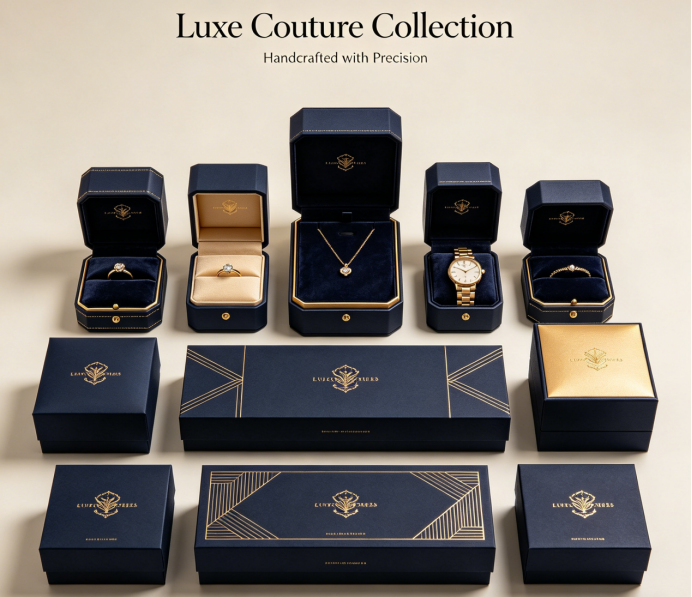
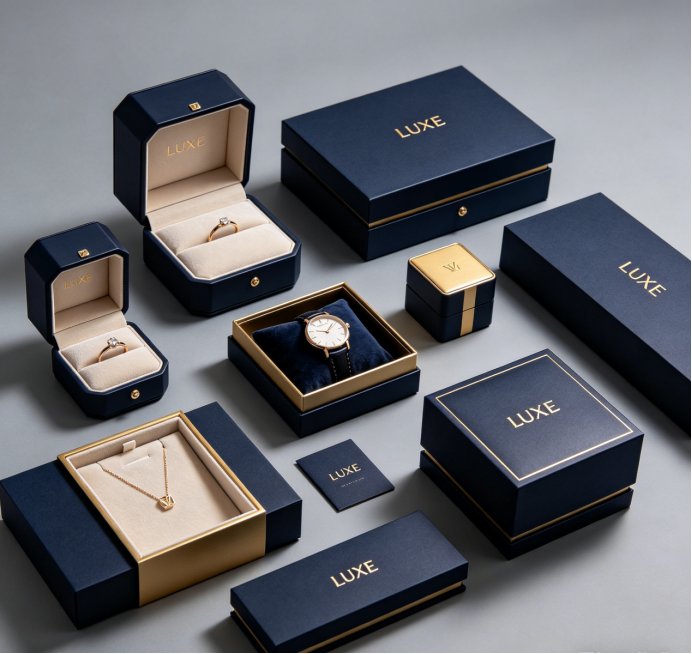
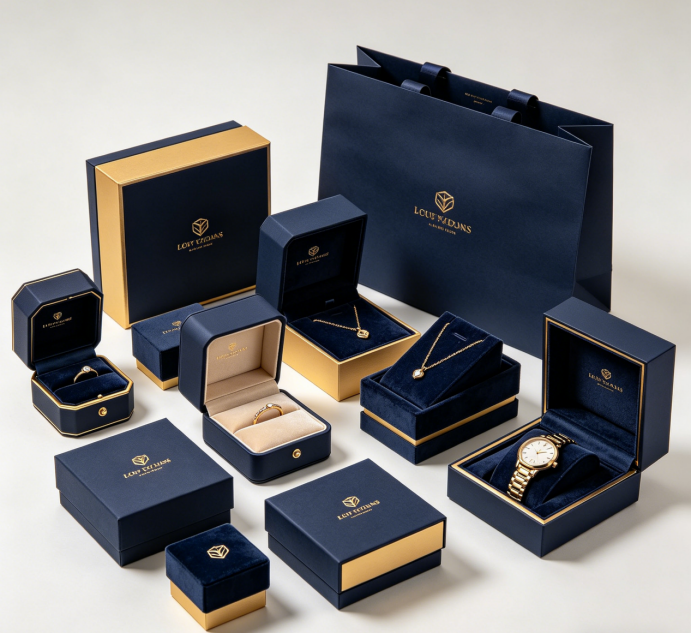
Strong luxury brands rarely design packaging one piece at a time.
Instead, they create complete packaging systems that include:
- Ring boxes
- Necklace boxes
- Bracelet boxes
- Watch packaging
- Gift presentation boxes
Using consistent materials, proportions, and finishes helps strengthen overall brand identity.
The packaging collection becomes part of the brand language itself.
Luxury packaging concepts must eventually become manufacturable products.
This stage involves:
- Structural engineering
- Material testing
- Color consistency management
- Sampling refinement
- Production optimization
The challenge is maintaining luxury appearance while ensuring practical scalability.
This is why many brands work closely with experienced packaging teams during development.
Conclusion
Luxury paper jewelry boxes represent a major shift in modern packaging design.
Today’s premium packaging is no longer defined by excess weight or overly complex decoration. Instead, it is defined by precision, texture, simplicity, and experience.
For jewelry brands seeking a more modern expression of luxury, paper packaging offers remarkable flexibility and aesthetic potential.
In many ways, paper has become one of the most sophisticated luxury packaging materials available today.
FAQ
Q1. Can paper jewelry boxes feel truly luxurious?
Yes, with premium materials, textures, and finishing, paper packaging can achieve a very high-end appearance.
Q2. What styles are popular for luxury paper jewelry boxes?
Rigid boxes, magnetic closure boxes, and drawer-style packaging are very popular.
Q3. What colors are commonly used in luxury jewelry packaging?
Neutral and muted tones such as black, ivory, beige, and dark green.
Q4. Why are luxury brands using more paper packaging?
Because it combines premium aesthetics with flexibility and modern minimalism.
Q5. Can luxury paper jewelry boxes be customized?
Yes, including structure, texture, finishing, and branding.


.png)
.png)
.png)

.png)

.png)