

Good bow tie packaging keeps the fabric presentation crisp, makes size and style easy to identify, and supports the way the product is sold. A rigid gift box may suit a premium single piece, while a sleeve, window box, drawer, or coordinated accessory set may work better for retail and e-commerce. Begin with the folded product dimensions and the desired opening sequence.
Options Worth Comparing Before You Brief a Supplier
Different structures solve different merchandising, protection, and fulfillment problems. Use these options as a starting point, then validate the final choice with the real product and a physical sample.
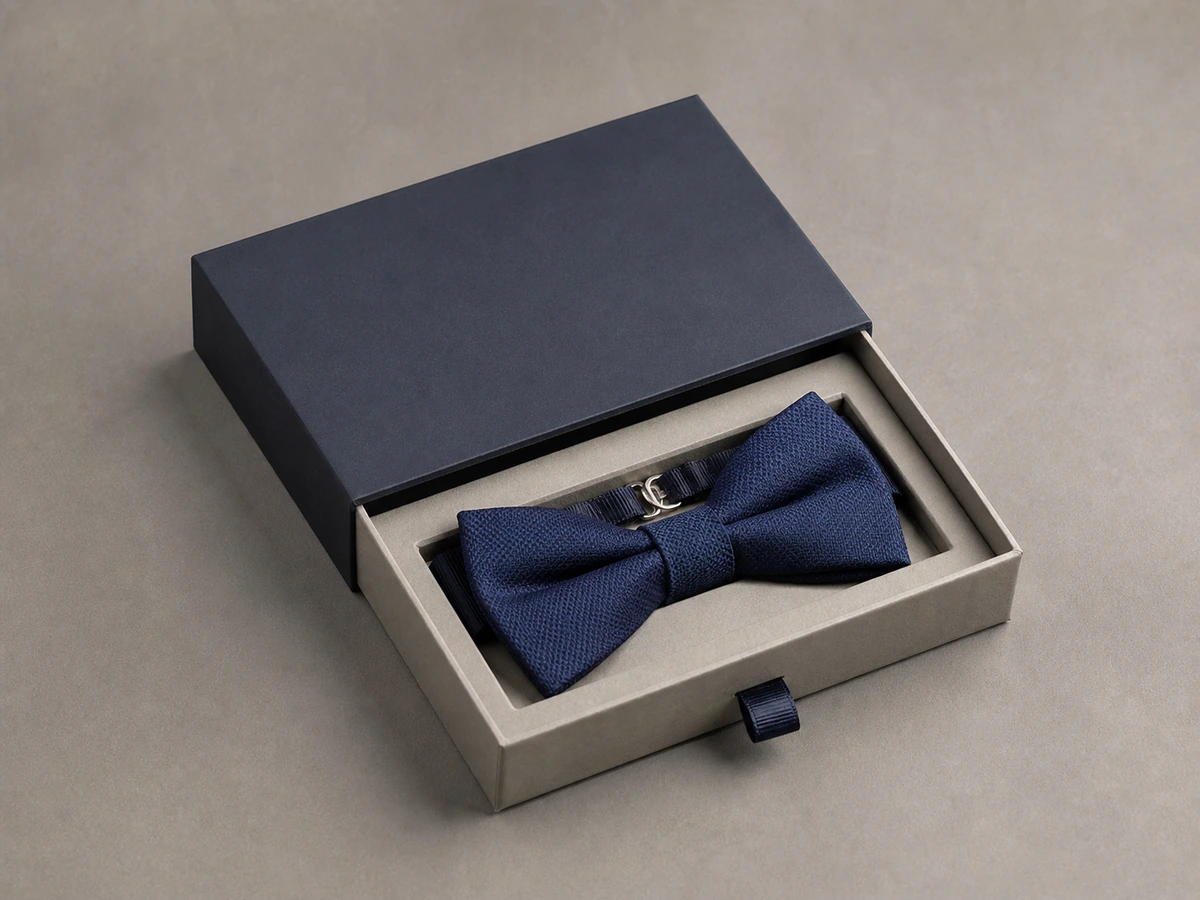
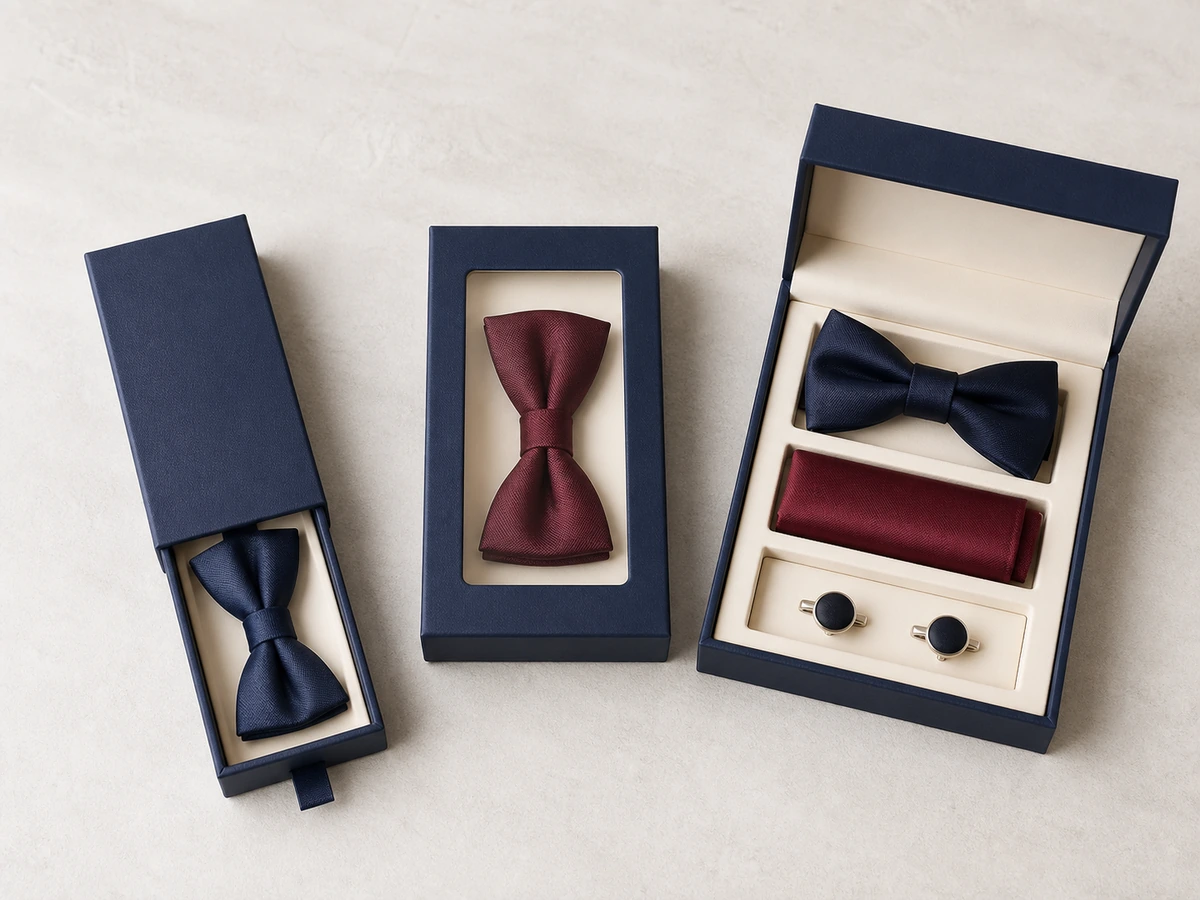
Slim drawer box
A shallow tray keeps the bow tie centered while a printed sleeve carries brand and product information.
Window retail box
A controlled window reveals color and pattern without requiring shoppers to open the package.
Wedding-party set
Use a modular insert for a bow tie, pocket square, cuff links, and a name or role card.
Corporate gift kit
Combine a bow tie with a lapel pin or card in a restrained, presentation-ready rigid box.
Subscription mailer insert
Use a compact paperboard cradle that limits movement inside the monthly shipping pack.
Reusable wardrobe box
A hinged or magnetic structure can become storage when the insert supports repeated removal.
Key Factors That Should Drive the Decision
A good brief connects the product, packaging structure, channel, brand experience, and supply requirements. Review each factor before discussing decoration or price.
Folded dimensions
Measure the bow, band, clasp, and any product card in the exact packing arrangement.
Fabric care
Avoid sharp insert edges, excessive compression, and surfaces that transfer lint or color.
Retail communication
Reserve space for size, material, care, barcode, and legal information without crowding the gift experience.
Set flexibility
If accessories change by order, use removable dividers or modular cavities rather than a single fixed insert.
Shipping efficiency
Shallow structures can reduce empty volume, but must still resist crushing inside the outer carton or mailer.
A Practical Comparison Framework
Use the same questions for every concept so attractive decoration does not hide structural or operational weaknesses.
|
Decision area |
What to compare |
Approval evidence |
|
Folded dimensions |
Measure the bow, band, clasp, and any product card in the exact packing arrangement. |
Physical sample, written specification, and agreed inspection point |
|
Fabric care |
Avoid sharp insert edges, excessive compression, and surfaces that transfer lint or color. |
Physical sample, written specification, and agreed inspection point |
|
Retail communication |
Reserve space for size, material, care, barcode, and legal information without crowding the gift experience. |
Physical sample, written specification, and agreed inspection point |
|
Set flexibility |
If accessories change by order, use removable dividers or modular cavities rather than a single fixed insert. |
Physical sample, written specification, and agreed inspection point |
|
Shipping efficiency |
Shallow structures can reduce empty volume, but must still resist crushing inside the outer carton or mailer. |
Physical sample, written specification, and agreed inspection point |
Step-by-Step Selection Process
Follow a controlled sequence. Each approval should reduce uncertainty before the project moves to a more expensive stage.
1. Define whether the package is for retail display, gifting, e-commerce, or a multi-item set.
2. Fold the production bow tie consistently and record the packed dimensions.
3. Select a structure that supports both protection and merchandising.
4. Prototype the insert with the real fabric and hardware.
5. Add branding and product information only after the structure works.
6. Test packing speed, shelf handling, and parcel delivery.
Sample and Quality Checklist
Inspect the package in the condition in which a customer will receive it. Record results instead of relying on general descriptions such as “premium quality.”
- · Dimensions and squareness match the approved specification
- · Jewelry remains centered after handling and inversion
- · Edges, seams, corners, and closures are safe and clean
- · Color and logo position match the approved physical reference
- · Surface resists expected rubbing, packing, and retail handling
- · The complete pack survives the intended distribution route
- · Master-carton quantity, protection, labels, and documentation are correct
Common Mistakes to Avoid
Most failures begin before production, when the brief leaves an important use condition undefined. Correct these issues during sampling rather than after delivery.
- · Designing around an unfolded product measurement
- · Compressing the bow so heavily that it arrives creased
- · Forgetting variable neck straps and clasps
- · Using an oversized box that increases shipping volume
- · Placing product labels over the main gift presentation
What to Include in Your Supplier Brief
A complete RFQ produces more comparable answers and reduces revisions. Attach drawings or photographs where they clarify the intended structure, but identify which details are mandatory.
- · Jewelry type, dimensions, weight, and presentation position
- · Required box dimensions or target size family
- · Structure, materials, insert, lining, and closure
- · Quantity by size, color, artwork, and delivery split
- · Logo files, print colors, finishes, and placement
- · Retail labels, barcode area, care card, or coordinated accessories
- · Packing method, shipping destination, and trade terms
- · Sample stages, approval date, inspection method, and required documents
Bow Tie Gift Boxes;custom jewelry packaging design;contact OnTheWay
Frequently Asked Questions
These answers address common early-stage sourcing questions. Final specifications should be confirmed against the actual jewelry and an approved sample.
What is the best box style for a single bow tie?
A shallow two-piece, drawer, or window box often works well, but the best choice depends on retail display, price position, shipping method, and whether the box is intended for reuse.
Can one package hold a bow tie and accessories?
Yes. A modular insert can organize a pocket square, cuff links, lapel pin, or card. Test each combination so small pieces cannot move under the fabric.
Should a bow tie box have a window?
A window helps retail color recognition, but it changes recyclability, scratch risk, and structural behavior. Compare a physical sample with a fully printed alternative.
What should be checked before bulk production?
Confirm packed fit, crease recovery, insert edges, logo registration, label area, barcode readability, carton packing, and an approved reference sample.
Choose the Box as a Complete Packaging System
The strongest choice balances protection, presentation, repeatability, fulfillment, and total delivered cost. Reduce risk by working from exact product dimensions, reviewing production-intent samples, and documenting every approval. OnTheWay offers custom jewelry packaging development across multiple box and display categories; buyers can share a project brief for a specification-based discussion.


.png)
.png)
.png)

.png)

.png)