

A jewelry display set is a coordinated group of presentation pieces used to organize rings, necklaces, earrings, bracelets, watches, trays, risers and logo blocks inside a store counter, showcase or exhibition booth. A good set does more than make jewelry look attractive. It controls product height, category separation, customer attention, staff access and brand consistency. For wholesale buyers, the right set also reduces daily display work because every piece has a clear position and visual role.
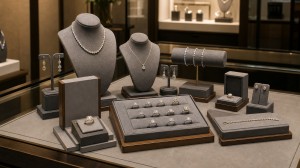
The first decision is not color or price. It is the jewelry mix. Ring-heavy collections need ring slots, ring blocks, ring trays and secure removable inserts. Necklace collections need busts, pendant stands and different display heights. Bracelet and watch collections need rolls, pillows and T-bars. Earring collections need boards, bars or small cards that keep pairs organized. If a buyer sells mixed collections, a modular display set usually works better than many unrelated individual props.
A boutique counter needs a compact layout that looks premium from the customer side and remains easy for staff to reset. A trade show booth needs portable, lightweight and fast-install display pieces. A chain-store rollout needs repeatable size, color and packaging standards across locations. A luxury launch may need stronger storytelling with logo blocks, layered risers and higher-end materials. Choosing by scenario helps avoid buying beautiful displays that are inconvenient in daily use.
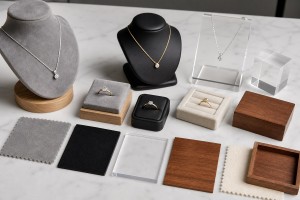
Velvet and microfiber create a soft luxury feeling and are common for fine jewelry. PU leather and leatherette surfaces feel clean, modern and easier to maintain. Acrylic can look minimal and works well for contemporary collections. Wood adds warmth and craft value, especially for natural, handmade or premium brands. Paper-based materials can support sustainable positioning when the structure is well made. The best material is the one that supports the brand message and can survive regular handling.
Before ordering, draw a simple counter map. Decide where the hero product sits, which pieces should be higher, which products need trays, and where the logo should appear. The display should guide the customer from the hero item to matching pieces. Avoid placing every product at the same height. Good visual merchandising uses layers, negative space and category grouping so the customer can understand the collection quickly.
Common custom options include display size, color matching, logo plate, hot stamping, fabric wrapping, removable inserts, tray partitions, storage boxes and export packing. Buyers should also confirm whether the supplier can make one sample before bulk production. For large retail programs, ask for Pantone color matching, material swatches, sample approval photos and carton packing details.
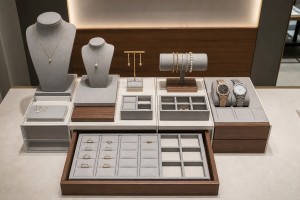
The most common mistake is buying a display set only because it looks luxurious in a photo. A display that is too large wastes counter space. A color that is too strong can distract from jewelry. A material that is hard to clean can age quickly in retail use. Another mistake is mixing unrelated display styles across one collection. Consistency matters because the display should support the jewelry, not compete with it.
Buying Checklist
Before placing an order, confirm jewelry categories, counter dimensions, preferred material, brand color, logo method, quantity, sample time, mass production time, packing method and shipping destination. If possible, request a sample or at least a 3D layout preview. A small planning step before production can prevent expensive display mismatch later.
FAQ
What should a jewelry display set include?
It should include the display pieces needed for the jewelry mix, such as ring trays, necklace busts, bracelet rolls, earring holders, risers, trays and logo blocks.
Which material is best for jewelry display sets?
There is no single best material. Velvet suits luxury fine jewelry, acrylic suits modern minimal displays, leatherette is practical for retail counters, and wood creates a natural premium feeling.
Can jewelry display sets be customized with a logo?
Yes. Common logo options include metal plates, hot stamping, embossing, UV printing, engraving and acrylic logo blocks.
How do I choose a display set for a small boutique?
Choose a compact modular layout with layered height, removable trays and a consistent color scheme so the counter looks organized without becoming crowded.
Need Custom Jewelry Packaging or Display Support?
If you are developing a new jewelry packaging or display project, ONTHEWAY Packaging can help review the structure, material, logo process, sample direction and bulk production details. Share your product type, target quantity, reference style and delivery market to receive a practical customization suggestion.


.png)
.png)
.png)

.png)

.png)