

Introduction: Why Display Suppliers Matter in Jewelry Retail:
Jewelry retail is highly visual.
Long before customers touch a product, they react to how it is presented. The layout, materials, lighting, and display arrangement all influence how people perceive the jewelry itself.
Because of this, choosing the right jewelry display set supplier is no longer a small operational decision—it has become part of brand strategy.
A good supplier does more than provide trays and stands. They help create consistency across retail spaces, improve product presentation, and support long-term store development.
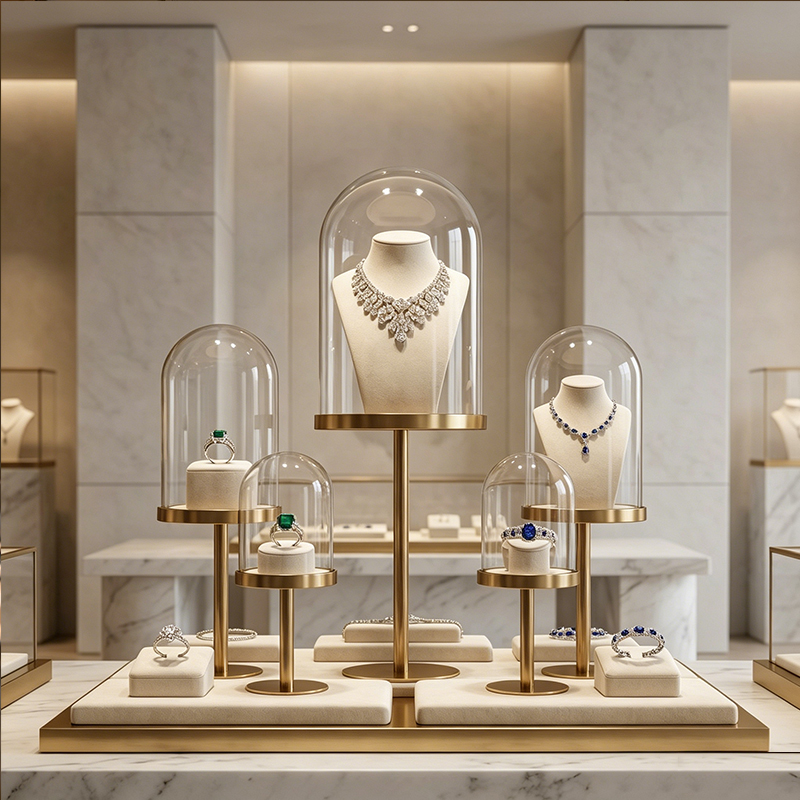
A jewelry display set supplier typically provides coordinated display products designed for jewelry retail environments.
These may include:
- Ring displays
- Necklace busts
- Earring holders
- Bracelet bars
- Jewelry trays
Countertop presentation blocks
More advanced suppliers also offer:
- Custom design development
- Material matching
- Store display coordination
- OEM & ODM production
- Bulk supply for chain stores or distributors
The goal is not simply to “display products,” but to create a complete presentation system.
One of the biggest changes in jewelry retail is the shift from buying separate display items to building complete display systems.
Retailers today want:
- Consistent materials across the store
- Unified colors and textures
- Flexible layouts for changing collections
- Modular display systems
This is especially important for:
- Multi-location retail brands
- Franchise stores
- Premium boutiques
- Seasonal merchandising campaigns
A strong supplier understands how all display elements work together—not just individually.
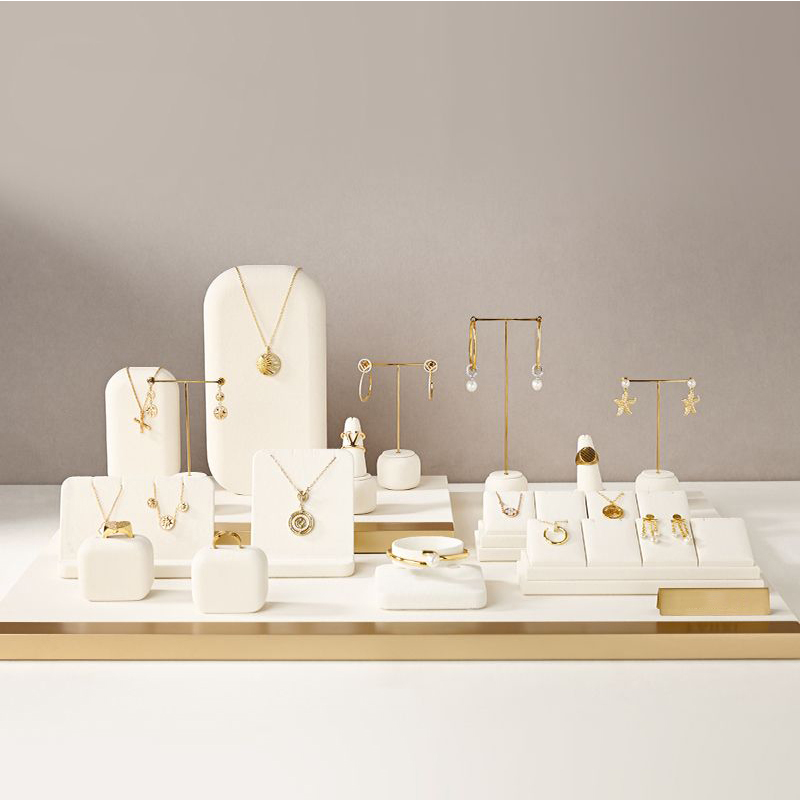
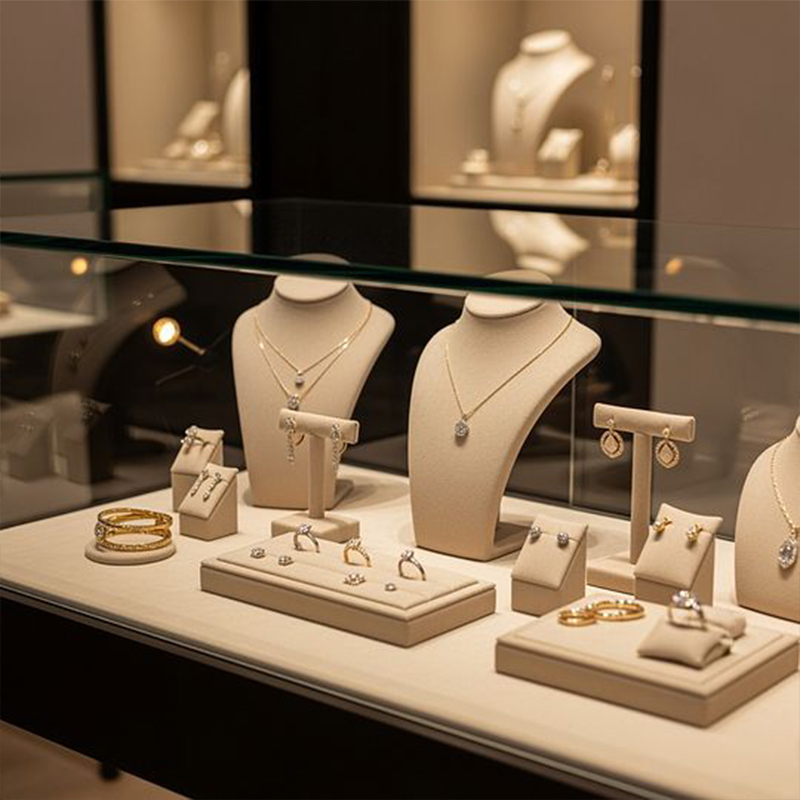
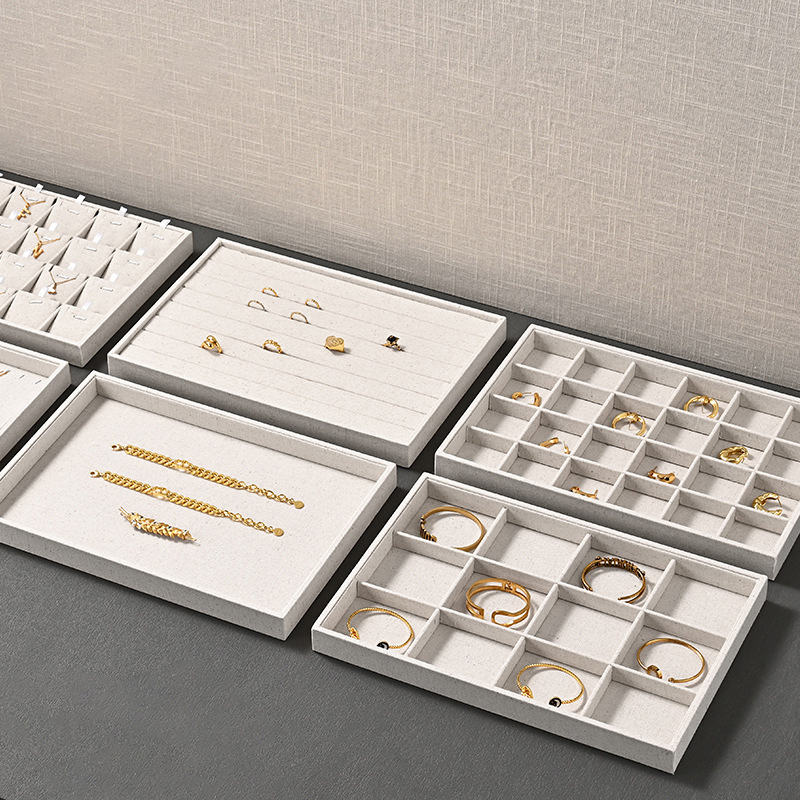
Different retail environments require different types of display systems.
Countertop Display Sets
Used for daily retail presentation and customer interaction.
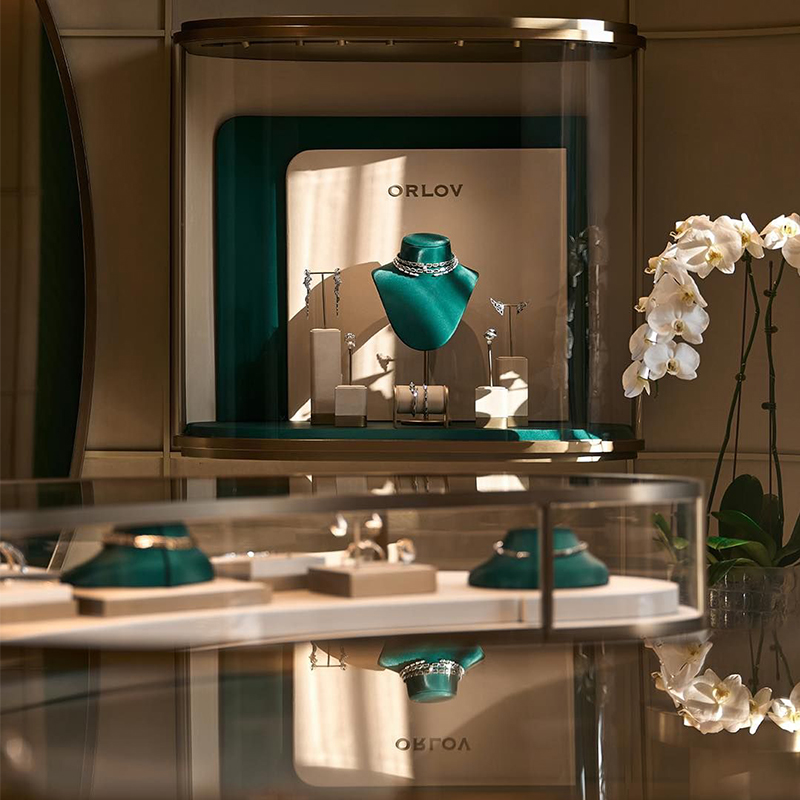
Window Display Sets
Designed to attract attention from outside the store.
Tray Display Systems
Popular for organized product presentation and easy inventory handling.
Modular Display Collections
Flexible systems that can be rearranged for new product launches.
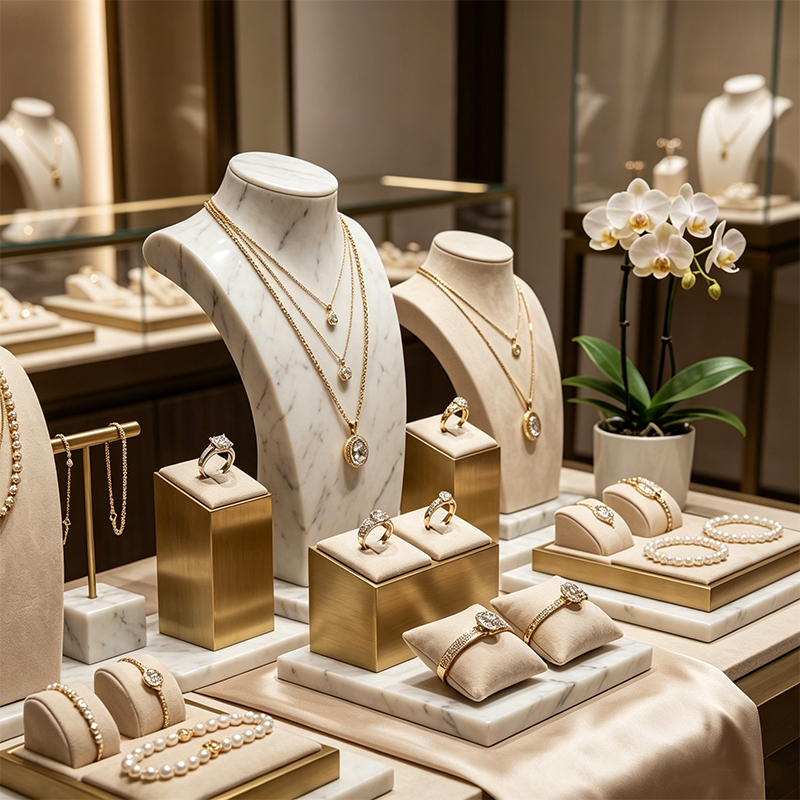
Materials influence not only appearance, but also customer perception.
Velvet
Soft, elegant, and widely used in luxury retail.
Wood
Adds warmth and craftsmanship to the display environment.
Acrylic
Modern and minimal, often used in contemporary stores.
Leatherette
Balances durability, elegance, and cost efficiency.
Each material creates a different atmosphere, and the right supplier should help guide these decisions based on your brand positioning.
Finding the right supplier requires looking beyond price alone.
Product Consistency
Can they maintain the same quality across multiple orders?
Material Stability
Do materials remain consistent over time?
Customization Capability
Can they adapt to your store requirements?
Communication Efficiency
Fast and clear communication reduces costly mistakes.
Production Capacity
Can they scale with your business growth?
Reliable supply matters far more in the long term than simply finding the cheapest option.
Good display design doesn’t just look better—it works better.
- Customers can navigate products more easily
- Jewelry is presented clearly and attractively
- The store feels more organized and professional
- The overall shopping experience becomes more enjoyable
In many cases, this directly influences purchasing decisions.
Custom display sets help brands create stronger visual identities.
Common customization options include:
- Brand logo integration
- Material and texture matching
- Store color coordination
- Product-specific display structures
- Seasonal display updates
For many brands, display design becomes part of the overall customer experience strategy.
Many retailers run into similar issues when working with inexperienced suppliers.
- Inconsistent material colors between batches
- Delays during seasonal launches
- Weak packaging leading to shipping damage
- Limited flexibility for custom requests
- Difficulty maintaining display consistency across stores
These problems may seem small individually, but together they can affect store image and operational efficiency.
At Ontheway Packaging, we approach jewelry displays as part of a larger retail presentation system.
What We Focus On:
- Coordinated display collections rather than isolated products
- Flexible customization for retail brands
- Stable production and material consistency
- Fast communication and sampling support
- Long-term cooperation with growing brands
We aim to help jewelry brands create displays that not only organize products—but strengthen retail identity.
Conclusion
Jewelry display sets are no longer just functional retail accessories—they are part of how customers experience a brand.
Choosing the right jewelry display set supplier means finding a partner who understands not only products, but retail presentation, consistency, and long-term collaboration.
For brands looking to improve store image and customer experience, the right supplier can make a significant difference.

FAQ
Q1. What does a jewelry display set supplier provide?
They provide coordinated display products and retail presentation solutions for jewelry stores.
Q2. Can display sets be customized?
Yes, including materials, colors, logo integration, and structure.
Q3. What materials are commonly used?
Velvet, wood, acrylic, and leatherette are the most common options.
Q4. What is the MOQ for custom display sets?
MOQ usually starts from 50–200 sets depending on customization.
Q5. How long does production take?
Typically 2–4 weeks depending on project complexity.


.png)
.png)
.png)

.png)

.png)